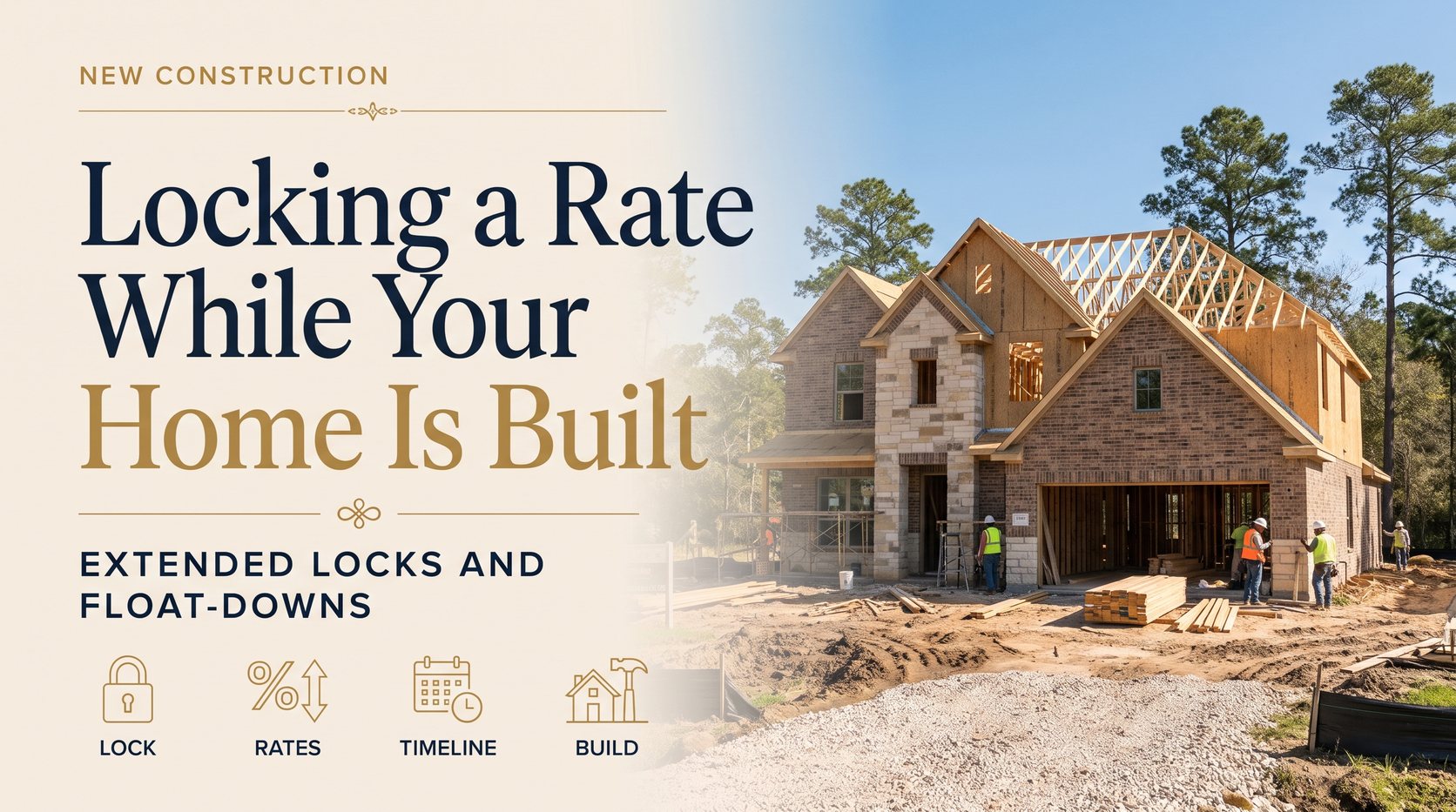
What's an extended rate lock on new construction? It's a lender's promise to hold your mortgage rate for longer than the usual 30 to 60 days, often 90 to 360, while your home is built. You'll usually pay an upfront fee for it. Some versions add a one-time float-down if rates fall before you close.
That matters more this month than it did in the spring. On October 28 the Federal Reserve held its target range at 3.75% to 4%, but two of the twelve voters, Governor Lisa Cook and Cleveland Fed President Beth Hammack, dissented in favor of a quarter-point hike. Traders are now betting on a hike at the December 8–9 meeting. The next day, Freddie Mac's weekly survey put the average 30-year fixed rate at 7.24%, down from 7.32% the week before but more than a full point above the 6.17% of a year ago. If you've signed a contract on a Houston home that won't be finished until spring, you're the buyer this decision lands on hardest.
Will a Fed rate hike raise mortgage rates?
Not directly, and not on the day it happens. Mortgage rates follow the bond market, which moves on what investors expect the Fed to do, so a December hike that everyone sees coming is partly priced in already. I go through the mechanics in what a Fed decision does to your mortgage payment. The risk for a to-be-built buyer is different. It's the six or eight months of inflation reports, jobs numbers and Fed meetings between your contract and your closing, any one of which can move rates a quarter point in a week. A lock doesn't predict where rates go. It takes the question off the table.
How do extended rate locks work on a to-be-built home?
A standard lock runs 30 to 60 days because that's how long a resale purchase takes to close. New construction doesn't fit that window, so lenders that work with builders offer longer terms. Fidelity Bank, as one example, lists locks of 60 to 360 days on conventional, FHA, VA and ARM loans, with an upfront fee that's credited toward closing costs when the loan closes. Terms differ a lot from lender to lender.
| Option | How long it holds | What it usually costs | Best fit |
|---|---|---|---|
| Float until near closing | Nothing held | Nothing upfront | Buyers who can absorb a higher payment if rates rise |
| Standard lock | 30–60 days | Usually built into pricing | Spec homes that close within two months |
| Extended lock | 90–360 days | Upfront fee, a higher rate, or both | To-be-built homes with a set budget |
| Extended lock with float-down | 90–360 days | A higher fee or rate than a plain extended lock | Buyers who want protection both ways |
The longer the lock, the more the lender is on the hook if rates rise, so you'll pay for that time somehow. Ask for every option as a rate and a dollar figure, side by side.
What does a float-down actually do?
A float-down lets you drop to a lower market rate once if rates fall after you lock. It's rarely automatic. Lenders typically require rates to fall by a set amount and limit when you can ask, usually in a window close to closing; Fidelity's version honors a lower rate if it falls within 45 days of closing. Get the trigger, the window and the cost in writing before you pay for one. A float-down you can't use because the window closed early isn't worth much.
When should you lock on new construction?
Two things set the timing: how sure you are of the completion date, and how much a rate increase would hurt your budget. If the builder can't give you a firm estimate yet, a lock that starts at contract may run out before the house is done. That's why some lenders suggest locking once framing begins, when the schedule is easier to trust. If your payment is already near the top of what you're comfortable with, though, waiting carries real risk in a market where traders expect the Fed to tighten.
Short answer? Lock when a rate increase would hurt more than the fee would.
Ask what happens if the builder runs late. Extension fees are common when a lock expires before closing, and who pays them depends on the lock agreement and your new-home contract. Read both. Houston builders' contracts often give them room on completion dates, so a delay that's the builder's fault can still end up on your bill.
How do builder incentives fit in?
Many builders pay for a long lock, a rate buydown or closing costs, but only if you use their preferred lender. Sometimes that's a strong offer. Sometimes the incentive is mostly baked into a higher rate or price, and an outside lender's extended lock comes out ahead even after you give up the credit. I walk through how to compare them in Do You Have to Use the Builder's Lender? and what a builder buydown is really worth. If you're still choosing a house, spec versus to-be-built is the other half of this decision, because a spec home that closes in 45 days needs no extended lock at all.
Questions to ask your lender this week
- What lock lengths do you offer, and what's the price of each, as a rate and a dollar fee?
- Is the upfront fee refundable if the build is canceled or I don't close?
- What does an extension cost, and who pays if the builder causes the delay?
- Is there a float-down, and what are its trigger, window and cost?
- Can I switch loan programs during the lock without losing it?
For more on the basics, see my rate lock explainer and how buyers handled this the last time rates jumped, in 2022. Run your own numbers on the mortgage calculator, and see my new construction page for how I represent buyers with Houston builders.
Frequently asked questions
How long can you lock a mortgage rate on new construction? Many lenders offer extended locks of 90 to 360 days for homes being built. Terms, fees and eligibility vary by lender, so get each option quoted as a rate and a dollar cost.
How much does an extended rate lock cost? It depends on the lender and the length. You may pay an upfront fee, accept a slightly higher rate, or both. Some lenders credit the fee toward closing costs when the loan closes. Ask whether it's refundable if you don't close.
What is a float-down option? A float-down lets you lower your locked rate once if market rates drop by a set amount, usually within a window close to closing. Get the trigger, the window and the cost in writing.
Does a Fed rate hike raise mortgage rates? Not directly. Mortgage rates follow the bond market, which prices in expected Fed moves ahead of time. The bigger risk for a buyer is rate movement over the months a home takes to build.
What happens if my rate lock expires before my new home is finished? You'll usually pay an extension fee or relock at the current market rate. Who pays depends on your lock agreement and your new-home contract, so read both before you sign.
Rates and lender terms change daily. This article is general information, not a loan offer or financial advice. Get written lock terms from your lender before you decide.
Last updated November 2026