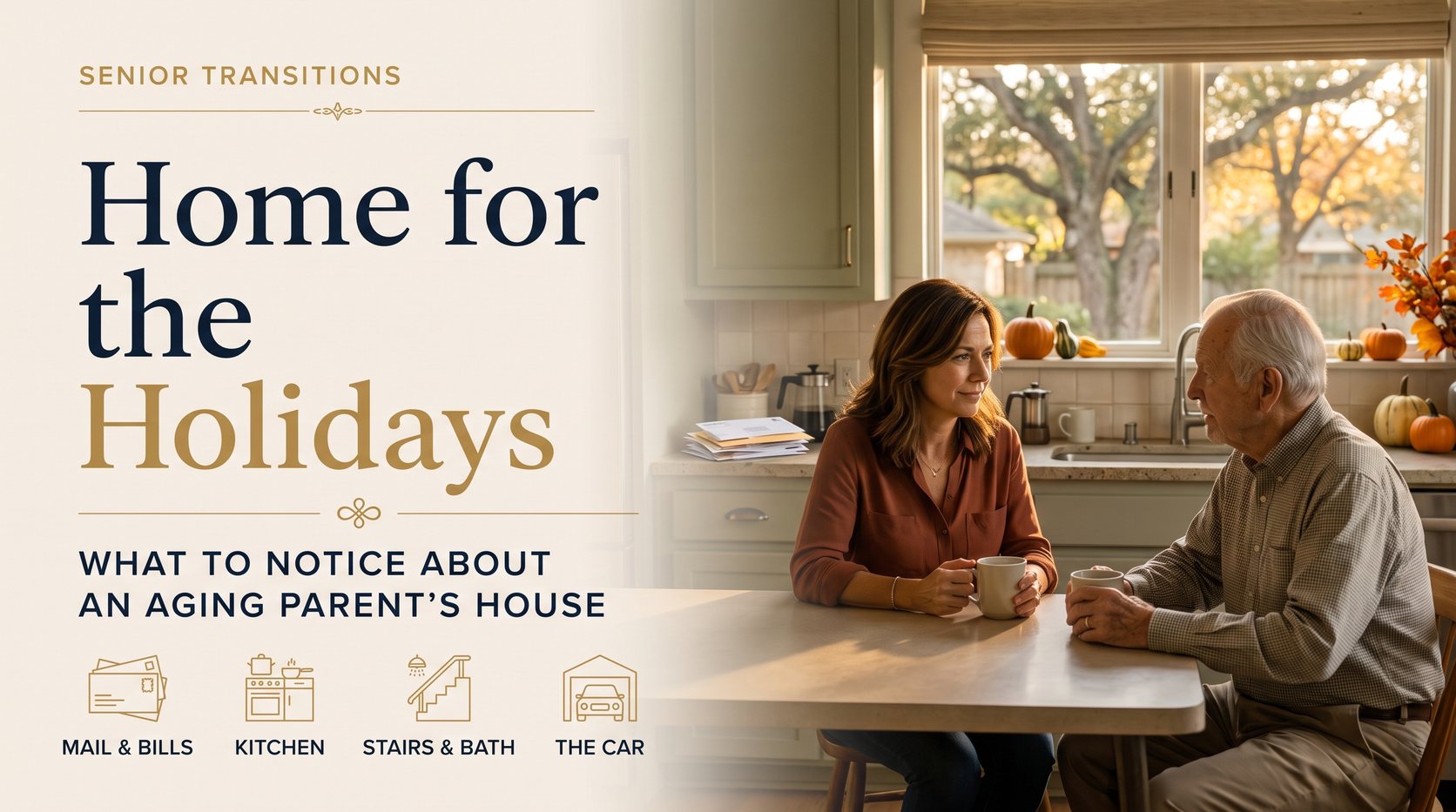
Halloween kicks off the season when grown kids come home. Between now and New Year's, a lot of families will spend more hours inside Mom and Dad's house than they have all year. Those visits are often the first time anyone notices that the house has started to get ahead of the people living in it.
Nurses learn to read a room before they read a chart. You notice the walker parked where it can't be reached, the medication bottles lined up on the counter, the throw rug curled at the corner. You can do a version of that on a holiday visit without turning it into an inspection. You only need to know where to look, and what to do with what you see.
What the house tells you
Parents are good at putting on a strong showing for a two-day visit. The house is harder to stage. Look at these with fresh eyes:
- The mail and the bills. A stack of unopened envelopes, late notices, or the same charity solicitation answered three times can be an early sign that paperwork has gotten hard to keep up with.
- The kitchen. Expired food in the fridge, scorch marks on pans or the stovetop, and a pantry that's either bare or overstocked with the same item.
- The stairs and the bathroom. Is the upstairs being used, or has a parent started sleeping on the couch? Are towel bars doing the job of grab bars? Is there a step-over tub nobody can step over anymore?
- Paths through the house. Clutter on the floor, loose rugs, cords across walkways, and dim hallways are where falls happen. Count the burned-out bulbs. High fixtures and ladders tell you a lot.
- The outside. An overgrown yard, gutters full of leaves, a roof stain on the ceiling, or a pool going green all point to upkeep that's become too much.
- The car. New dings and scrapes on the bumper or the garage door frame are worth a closer look, especially if Dad says he's "only driving to church and the store."
- Medications. Pill organizers that are full on the wrong days, or prescriptions that haven't been refilled.
None of these alone means a parent can't live safely at home. A pattern is different. If you're seeing three or four, write them down with the date. Memories of a holiday visit blur fast, and notes help when you compare what you saw with what your siblings saw.
What not to do at the dinner table
The worst place to bring this up is in front of the whole family over turkey. A parent who feels cornered digs in, and the next year's visits get stiffer. Skip the speech about selling the house. Skip "you can't live here anymore." And don't send the sibling who always argues with Dad to deliver the news.
Instead, pick a quiet moment with one or two people your parent trusts. Ask questions rather than reporting conclusions. "How are the stairs these days?" lands better than "you shouldn't be on the stairs." Ask what they'd want if things got harder, before anything forces the issue. Most parents have thought about it more than their kids realize.
If siblings see it differently, that's normal. The one who lives nearby and handles the weekly errands often sees more than the one who flies in for Christmas, and that gap can turn into a fight. I've written about what to do when siblings disagree about a parent's house, and about what to do when a parent refuses to leave.
Turning what you noticed into next steps
- Start with health, not real estate. Falls, confusion, missed medications, or driving worries belong with your parent's doctor first. An occupational therapist can do a home safety evaluation and suggest changes you'd never think of.
- Price out staying. Grab bars, a walk-in shower, better lighting, and some regular help with the yard and the house can keep a parent at home for years. Get real quotes so you're comparing real numbers. My post on aging in place versus moving walks through that comparison.
- Get the paperwork in place. Powers of attorney and the right deed or estate documents are much easier to set up while everyone's healthy. My legacy protection guide covers the Texas tools families use.
- If a move is coming, give it a timeline. A house sold on the owner's schedule almost always does better than one sold after a hospital stay. Spring is a strong time to list in Houston, and the sorting, repairs, and decisions that come before it take months. The downsizing checklist is a good place to start.
If your parent lives far away and would be better off near you, helping a parent move closer to you in Houston covers where to begin.
The holidays won't give you every answer, but they can give you an honest picture while there's still time to plan. As a Certified Senior Transition Specialist, I help families sort out the real estate side once they know what level of support a parent needs, and I'm glad to be a sounding board before anyone's ready to list. Call me after the holidays, or before, if what you saw is weighing on you.
This article is general information, not medical or legal advice. If you have concerns about a parent's health or safety, talk with their physician. For legal documents, talk with an elder law or estate planning attorney.
Last updated October 2026