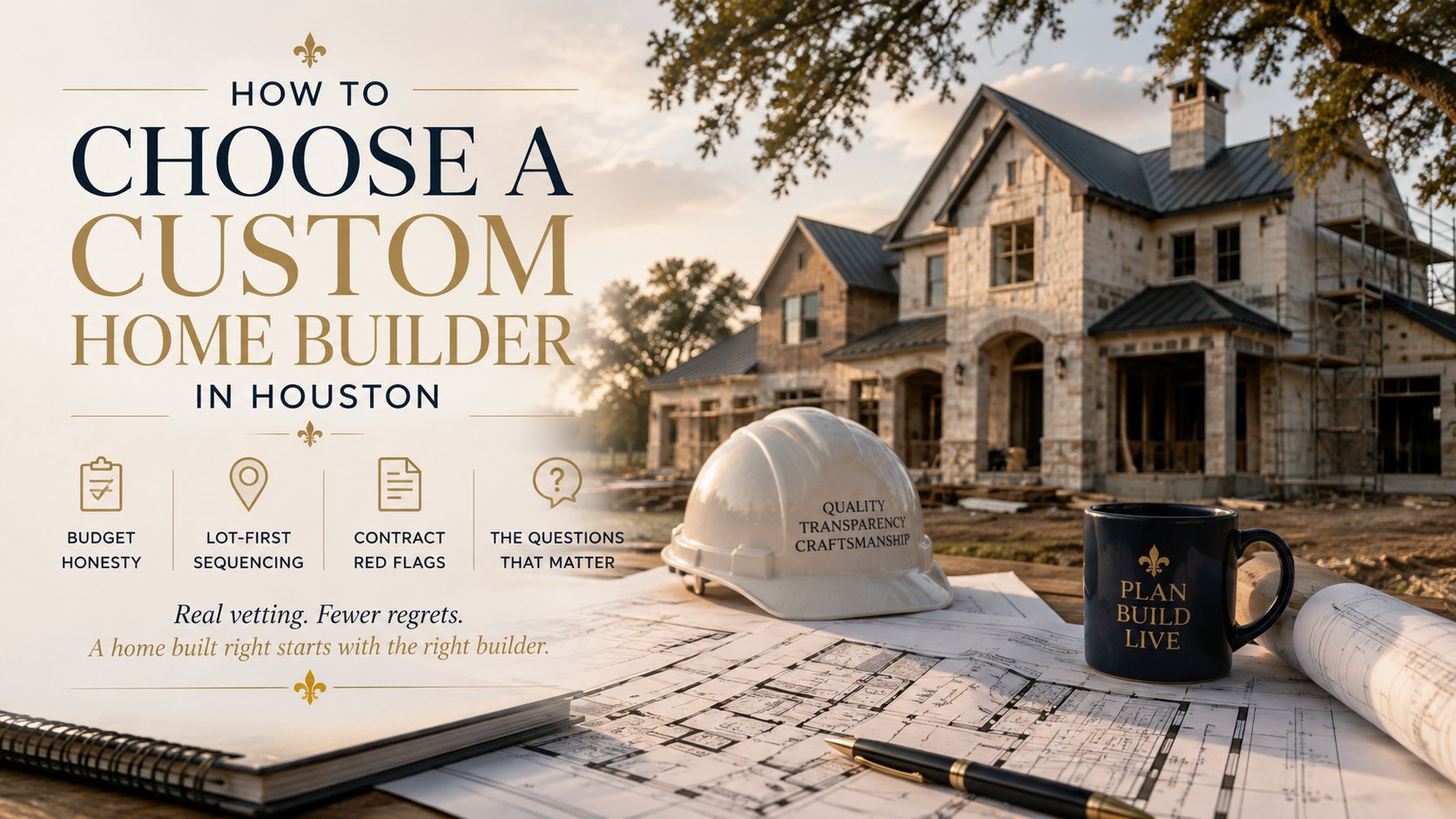
I have four custom builder reviews on this site now, Frankel Building Group, Sims Luxury Builders, Jamestown Estate Homes, and Partners in Building, along with a couple of others, and the question I still get more than any other from luxury buyers is more basic than "which one is best." It's "how do I actually choose, and what am I supposed to be looking at?" Here's the honest process, not a vendor comparison.
Find the Lot Before You Fall in Love with a Builder
Most custom builders will tell you the same thing, and they're right: your lot determines more of your budget and design than almost anything else. Foundation type, drainage, tree preservation requirements, deed restrictions, and setback rules all get locked in by the specific parcel, and a builder can't give you a meaningful budget conversation until that piece is settled. If you already own land, start there. If you don't, resist the pull to pick a builder first and hunt for a lot second, since the two decisions directly inform each other.
Get Honest About Full-Custom Timelines
Expect 12 to 30 months from signed contract to move-in for a truly custom home, longer for large estates or challenging lots, and that's after design and permitting, which can add several more months before construction even starts. Builders who promise a dramatically faster timeline for full-custom work are either building something less custom than advertised, or setting an expectation they know they can't consistently hit. Ask directly about their average timeline on their last three completed projects, not their best-case scenario.
Understand What "Custom" Actually Means Here
The word gets used loosely across the industry. True full-custom means an architect designs your home from a blank page, built to your specific lot and program. Semi-custom means you're selecting from and modifying an existing plan library, still meaningfully personal but with real limits on what changes. Neither is wrong, but you should know which one you're actually buying before you sign, since the price, timeline, and flexibility differ substantially between the two. If a builder markets themselves as custom but works primarily from a plan catalog, that's worth a direct conversation, not a disqualifier by itself.
The Questions That Matter More Than the Portfolio
A beautiful portfolio tells you what a builder is capable of on their best day. These questions tell you what working with them actually looks like:
How are change orders priced and approved? Custom builds involve decisions throughout construction, not just at the start, and how a builder handles a mid-project design change, in writing, with clear pricing, before work proceeds, tells you more about the relationship than almost anything else.
What's included in the base price versus what's an allowance? Allowances for items like flooring, fixtures, and cabinetry are standard, but the actual dollar figures behind those allowances vary enormously between builders, and a low headline price with unrealistic allowances is one of the more common ways custom-build budgets blow up.
Who is actually on site day to day? Ask specifically whether you'll have a dedicated superintendent for your project or one managing several builds simultaneously, since that affects how quickly problems actually get caught and addressed.
Can I talk to a client whose project finished in the last year, not five years ago? References from a builder's best historical project tell you less than a recent one, since crews, subcontractor relationships, and management can shift meaningfully over even a few years.
Contract Red Flags Worth Knowing Before You Sign
A cost-plus contract without a guaranteed maximum price leaves you exposed to unlimited upside risk if the project runs over, worth understanding clearly versus a fixed-price or cost-plus-with-a-cap structure. Vague allowance language ("flooring allowance: TBD" rather than a specific dollar figure) is a place where disputes commonly start later. And a payment schedule that front-loads a large percentage of the contract price before meaningful work has happened on site is worth questioning directly, not assuming is standard.
Build Quality You Can Actually Check
Before you're deep into a relationship with a specific builder, it's worth doing your own homework beyond their reviews: check their standing with the Texas Real Estate Commission and Texas Board of Architectural Examiners if applicable, confirm active licensing and insurance, and if possible, walk a current job site, not just a finished model. A builder who's comfortable showing you an active, mid-construction project alongside their polished portfolio is telling you something real about their confidence in their own process.
Whichever builder you're considering, I'd rather walk through the specific contract and process with you directly than have you navigate it alone. My builder reviews on this site are a starting point, not the whole conversation.
Talk to Fay
Comparing custom builders and want a second set of eyes on a contract or a specific builder's track record? Let's talk it through before you sign anything.
Book a Free Consultation →