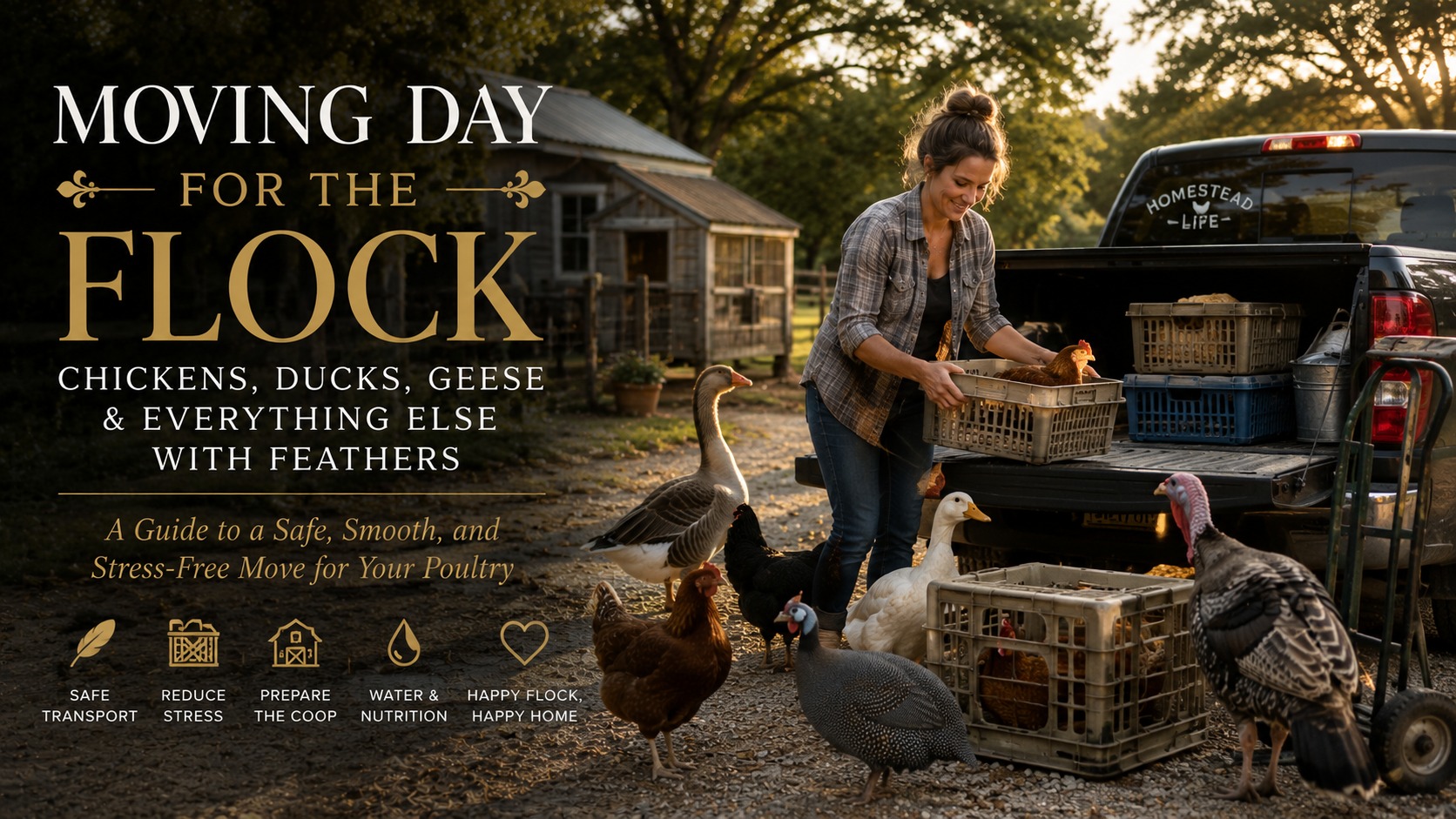
If you're moving a homestead, not just a house, your moving checklist looks nothing like a typical family's. This is the first post in a short series on exactly that — starting with the flock, since poultry and waterfowl are usually the first animals a new homesteading family actually owns, and moving day for them is genuinely different from anything a standard moving guide covers.
The core principle for every bird on this list: minimize stress first, worry about logistics second. Birds are prey animals by instinct, which means the chaos of a moving day — strange sounds, unfamiliar handling, a car ride — registers as real danger to them, not just inconvenience. A calm, quiet, dark transport environment does more for a safe move than almost anything else you can control.
Chickens. Move them in a well-ventilated crate or carrier, one that limits how much they can see and flap around in — reduced visual stimulation genuinely calms most chickens down faster than a wide-open carrier does. A layer of straw or shavings on the bottom gives them secure footing and absorbs waste during transport. Keep the crate out of direct sun and away from blasting AC vents; chickens regulate temperature poorly in either extreme. If your move happens during a Houston summer specifically, this is exactly the kind of transport that needs to happen in the coolest part of the day, same as the advice in my general Houston moving guide — a hot car is dangerous for a crated chicken even faster than it is for a person.
Ducks and geese. Similar transport principles to chickens — a secure, ventilated crate, minimal visual stimulation, protection from temperature extremes — but with one real difference: waterfowl need access to water more urgently during a move, since they're prone to dehydration faster than chickens in some conditions, and their systems are used to regular water access for both drinking and preening. If your move involves any significant travel time, plan a water-access stop, not just a single trip straight through. Geese in particular can be more vocal and reactive to stress than ducks, so extra care with a calm, covered crate matters more for them specifically.
Turkeys. Larger birds need proportionally larger crates — cramming a turkey into an undersized carrier creates real injury risk to their legs and wings during transport, more so than with smaller birds. Otherwise, the same core rules apply: ventilated, covered, temperature-protected, minimal handling stress.
Guinea fowl. These birds are notoriously flighty and stress easily even by poultry standards, so the "minimize stress first" principle matters more here than almost anywhere else on this list. A fully covered crate, moved calmly and without sudden noise, makes a real difference. Guinea fowl are also more prone to trying to escape during handling than chickens, so double-check crate latches specifically before you assume a bird is secure.
Peacocks. If you're moving peacocks — and more Houston-area rural properties have them than people expect, often as much for tradition as for any practical purpose — they need considerably more space in transport than standard poultry given their size and tail length, and they're genuinely strong enough to injure themselves against a too-small crate. A large, sturdy dog crate works better than a standard poultry carrier for a full-grown peacock.
Quail. On the opposite end of the size spectrum, quail are small enough that a much more modest carrier works fine, but they're also delicate enough that overcrowding a transport box creates real injury risk from birds trampling each other in a panic. Give them more space per bird than you'd think necessary, not less.
Setting up the new coop before the birds arrive, not after. This is the mistake I hear about most often. Get the new coop or run fully secured — predator-proofed, weatherproofed, with feed and water already in place — before you introduce any bird to it. A flock arriving to an unfinished or insecure space compounds the stress of the move itself, and in a rural or semi-rural Houston-area property, predator pressure (hawks, coyotes, even loose dogs) is a real first-week risk if the coop isn't fully ready on day one.
Timing the introduction to a new flock, if you're combining birds. If your move involves merging your existing flock with birds already on the new property, or introducing new birds to an established flock, don't do this on moving day itself. Let your birds settle into the new space alone first, then handle flock integration as its own separate, gradual process over the following one to two weeks — trying to do both at once meaningfully increases stress and the risk of aggressive pecking-order conflicts.
This is part one of a short series on moving farm animals specifically — horses, donkeys and mules, cattle, goats, sheep and pigs, llamas and alpacas, emus, and honeybees each get their own real treatment rather than a single generic "moving livestock" checklist. Next up: moving cattle to a new property.
Talk to Fay
Moving a flock along with the rest of your household? Let's talk through timing your move around everything that needs to travel safely.
Book a Free Consultation →